Egyptian vs Turkish vs Regular Cotton Towels: What's the Difference?
A detailed comparison of Egyptian cotton, Turkish cotton, and standard cotton towels. Learn how fibre length, absorbency, and durability compare across all three.
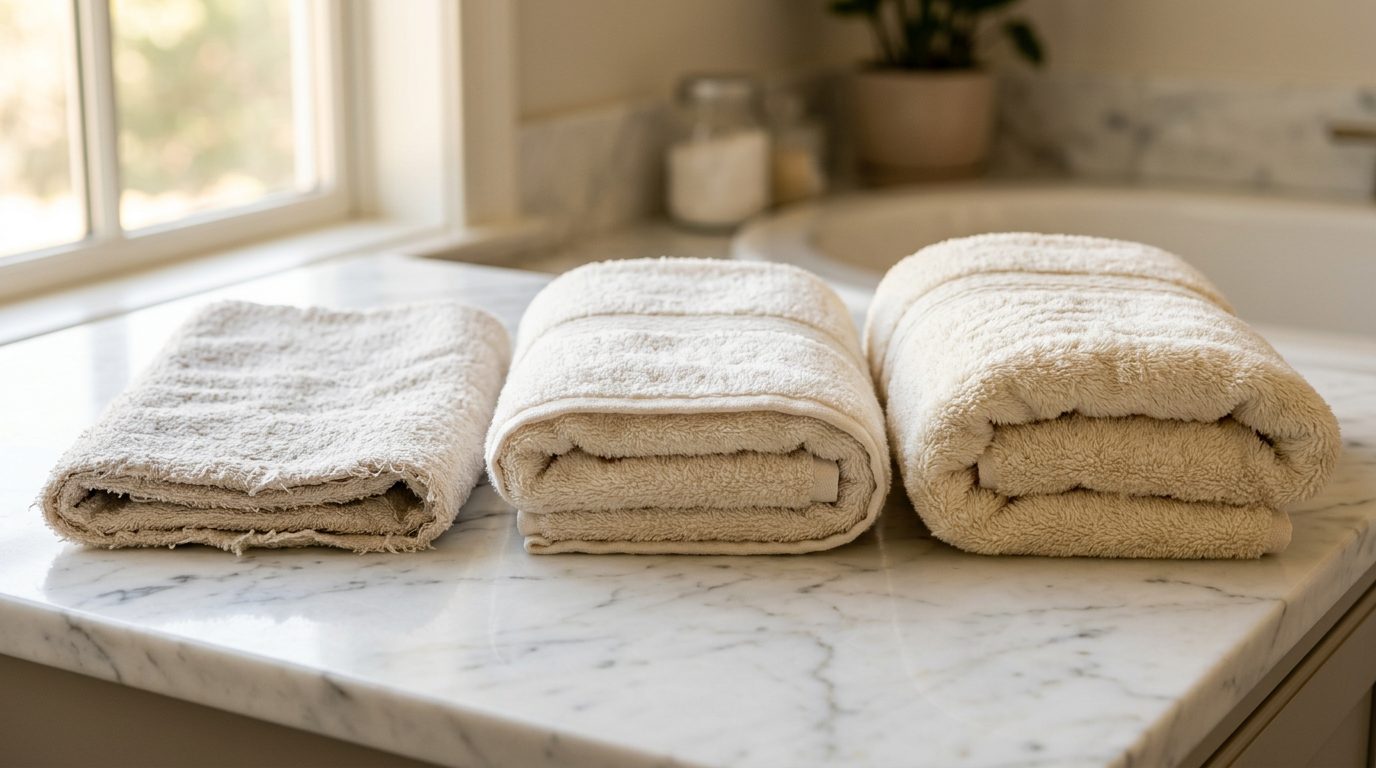
The Three Types of Cotton Towels
Not all cotton is created equal. The plant species, where it's grown, and how it's processed all affect how a towel feels, absorbs, and holds up over time. Here's how the three main types compare.
Egyptian Cotton
Fibre type: Extra-long staple (ELS), up to 2 inches per fibre
Egyptian cotton is grown exclusively in the Nile Delta region of Egypt, where the climate and rich soil produce the longest cotton fibres in the world. These extra-long staples mean:
- Softer fabric — longer fibres create smoother yarns with fewer loose ends
- Higher absorbency — the yarn structure holds more water per gram
- Greater durability — fewer joins mean less pilling and a longer lifespan
- Gets softer with washing — the fibres relax over time instead of breaking down
Egyptian cotton towels at 600-800 GSM represent the highest standard in bath textiles. They're what you'll find in five-star hotels and luxury spas worldwide.
Shop our Egyptian cotton towels — available in 600 GSM (Signature) and 800 GSM (Reserve).
Turkish Cotton
Fibre type: Long staple, approximately 1.2-1.4 inches per fibre
Turkish cotton (grown in the Aegean region of Turkey) produces long-staple fibres — not quite as long as Egyptian, but longer than standard cotton. Turkish towels tend to be:
- Plush and fluffy — similar softness to Egyptian in the first few washes
- Good absorbency — slightly less than Egyptian due to shorter fibre length
- Moderate durability — will last several years with proper care
- Quick-drying — many Turkish towels use a flat-woven (peshtemal) construction
Turkish cotton is a solid mid-range option. The main trade-off versus Egyptian is long-term softness — Turkish cotton towels may start to feel rougher after 50+ washes, while Egyptian cotton continues to improve.
Regular Cotton (Upland Cotton)
Fibre type: Short staple, approximately 0.8-1.0 inches per fibre
Regular cotton (also called upland cotton) accounts for about 90% of global cotton production. It's the cotton you'll find in most mass-market towels. Characteristics:
- Affordable — significantly cheaper than Egyptian or Turkish
- Adequate absorbency — gets the job done, but reaches saturation faster
- Shorter lifespan — more prone to pilling, thinning, and roughness over time
- May feel rough after washing — the short fibres break down and create a coarser texture
If you're buying towels for a gym bag or a holiday rental, regular cotton works fine. For daily home use where comfort and longevity matter, the investment in Egyptian cotton pays off within the first year.
Side-by-Side Comparison
- Fibre length: Egyptian (2 in) > Turkish (1.3 in) > Regular (0.9 in)
- Softness: Egyptian > Turkish > Regular
- Absorbency: Egyptian > Turkish > Regular
- Durability: Egyptian (10+ years) > Turkish (5-7 years) > Regular (2-3 years)
- Price: Egyptian > Turkish > Regular
- Gets softer over time: Egyptian (yes) > Turkish (initially, then plateaus) > Regular (no, gets rougher)
The Bottom Line
Egyptian cotton is the clear winner for anyone who values softness, absorbency, and longevity. The higher upfront cost is offset by a lifespan that's 3-5x longer than standard cotton towels — and unlike regular cotton, Egyptian cotton towels actually improve with age.
If you're considering the upgrade, start with our Signature 600 GSM collection for everyday luxury, or go straight to the Reserve 800 GSM for the densest towel we make.
Ready to experience the difference?
Shop Egyptian Cotton Towels