The 2026 Guide to Luxury Bath Towels: Finding the Ultimate Spa Experience
Learn how cotton origin, GSM weight, and weave construction define a truly luxurious bath towel. A practical guide to choosing premium Egyptian cotton linens in 2026.
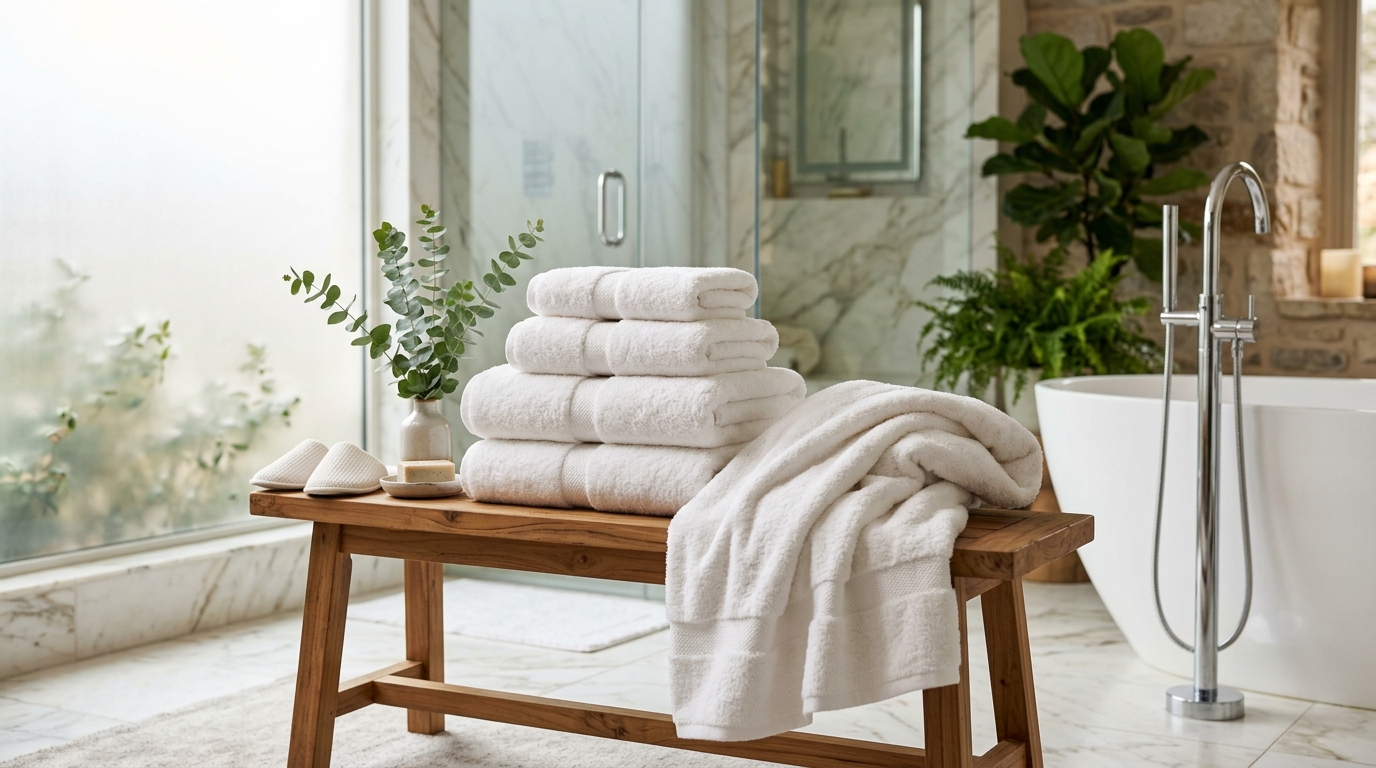
The Landscape of Luxury Bath Linens in 2026
The global market for luxury bath linens has undergone a profound transformation. Today, the modern consumer views the bath towel not as a mere utility, but as a critical component of a holistic wellness and spa-at-home experience.
With a market segmented by traditional retail, specialized artisans, and digital-native innovators, finding authentic quality can be challenging. When shopping for premium bath linens in 2026, it helps to understand the specifications that actually drive performance rather than relying on marketing language alone.
How do you distinguish true luxury from clever marketing? This guide breaks down the technical specifications, fiber origins, and weave construction that dictate the performance of a great towel.
Not All Cotton Is Created Equal
The technical superiority of a bath towel is fundamentally dictated by the botanical species of the cotton and the geographic conditions of its cultivation.
Extra-Long Staple Egyptian Cotton (The Gold Standard)
Sourced from the fertile Nile Delta, authentic Giza Egyptian cotton produces fibers up to 2.0 inches long. This extreme length allows the yarn to be spun exceptionally fine without breaking, resulting in a naturally silky texture that resists pilling and lasts for over a decade. Kemet Cotton exclusively utilizes this vertical heritage.
Turkish Cotton
Turkish cotton offers a long staple (1.1 to 1.4 inches) that provides a balance between plushness and quick drying times. It is a widely used and well-regarded fiber in the premium market.
Standard Upland Cotton
Often marketed under ambiguous "100% Cotton" or "Egyptian-Quality" labels, these fibers are significantly shorter (under 1.1 inches). Shorter fibers require thicker, coarser yarn and are prone to rapid thinning. This is why a GSM rating and a clear fiber-origin disclosure matter more than the word "premium" on a label.
Decoding GSM and Weave: What the Numbers Mean
Beyond fiber origin, a towel's performance is defined by its density, measured in GSM (Grams per Square Meter). If you want a deeper dive, read our complete GSM towel weight guide.
600 GSM (The Signature Tier)
The sweet spot for everyday luxury. A 600 GSM towel offers substantial absorbency while remaining light enough to dry efficiently between uses. This is the weight behind our Signature Collection.
800 GSM (The Reserve Tier)
Designed for a maximalist, spa-like experience. These towels are exceptionally heavy and absorbent, ideal for weekend indulgence and guest bathrooms. This is the weight behind our Reserve Collection.
Why GSM Alone Is Not Enough
A high GSM is only luxurious if achieved with high-quality fibers. A high-GSM towel made from cheap, short-staple cotton will feel heavy, scratchy, and take far too long to dry. Conversely, utilizing zero-twist weaving techniques with Extra-Long Staple cotton creates an open fiber structure that maximizes softness and airflow. This is the approach used across all Kemet Cotton collections.
What to Look For in a Luxury Towel
To make an informed decision, focus on the specifications that genuinely predict performance rather than on marketing language.
- Fiber origin and staple length. Extra-long staple (ELS) Egyptian cotton from the Nile Delta produces the finest, most durable yarn. A brand that is confident in its cotton will disclose the origin and fiber grade.
- GSM weight. Look for a stated GSM. A towel that lists 600 GSM or 800 GSM is being transparent about its density; a towel with no GSM at all usually has something to hide.
- Weave construction. Zero-twist weaving with long-staple cotton creates an open, airy structure that maximizes softness and absorbency.
- Honest care instructions. Quality cotton towels are designed to soften on their own and should tell you to skip fabric softener, which coats fibers in silicone and reduces absorbency over time.
Kemet Cotton's Reserve Collection is built on 100% authentic Giza Egyptian cotton at 800 GSM, with the fiber origin and weight disclosed up front.
The Impact of Manufacturing Origin
The geographical origin of a luxury towel is closely tied to the quality and longevity of the cotton.
In traditional textile hubs like Egypt, manufacturing is optimized to preserve the cotton. Hand-picking avoids the mechanical stress of industrial harvesting, preserving the natural wax of the cotton boll. This allows Kemet Cotton towels to experience the "Bloom Effect," where the fabric becomes softer and more absorbent with every wash.
Mass-produced, machine-harvested cotton can suffer from fiber breakage. To mask a coarser texture, some manufacturers coat the towels in silicone-based softeners. These create an initial soft feel out of the box but can wash away over time, leaving a rougher towel behind. For tips on maintaining your towels long-term, see our Egyptian cotton towel care guide.
The Verdict: Investing in True Luxury
The 2026 market proves that the physical performance of a towel is inseparable from the botanical superiority of its cotton and the transparency of its maker.
While algorithm-driven brands offer aesthetic marketing, true luxury requires a foundation of authenticity. Authentic Egyptian Giza cotton, with its extra-long staples and vertical, hand-picked integrity, remains the undisputed benchmark.
For the discerning consumer, the recommendation is simple: prioritize vertical heritage. Choose towels that are manufactured where their cotton is grown, insist on transparent fiber-origin and GSM disclosure, and invest in linens that are engineered not just to look beautiful on day one, but to elevate your daily ritual for a decade to come.
Explore Kemet Cotton's 100% Authentic Egyptian Cotton Collections
Ready to experience the difference?
Shop Egyptian Cotton Towels