Towel GSM Explained: 600 vs 700 vs 800 GSM, and Which Weight to Buy
GSM is the one number on a towel label that most people half understand. It is not a grade and it is not a promise. It is a weight. This is what it measures, what it cannot tell you, and how I would choose between 600, 700 and 800 GSM for a real bathroom, including the kind that does not have a window.
By Adam, Founder of Kemet Cotton · Updated August 2026 · 14 min read
The short version
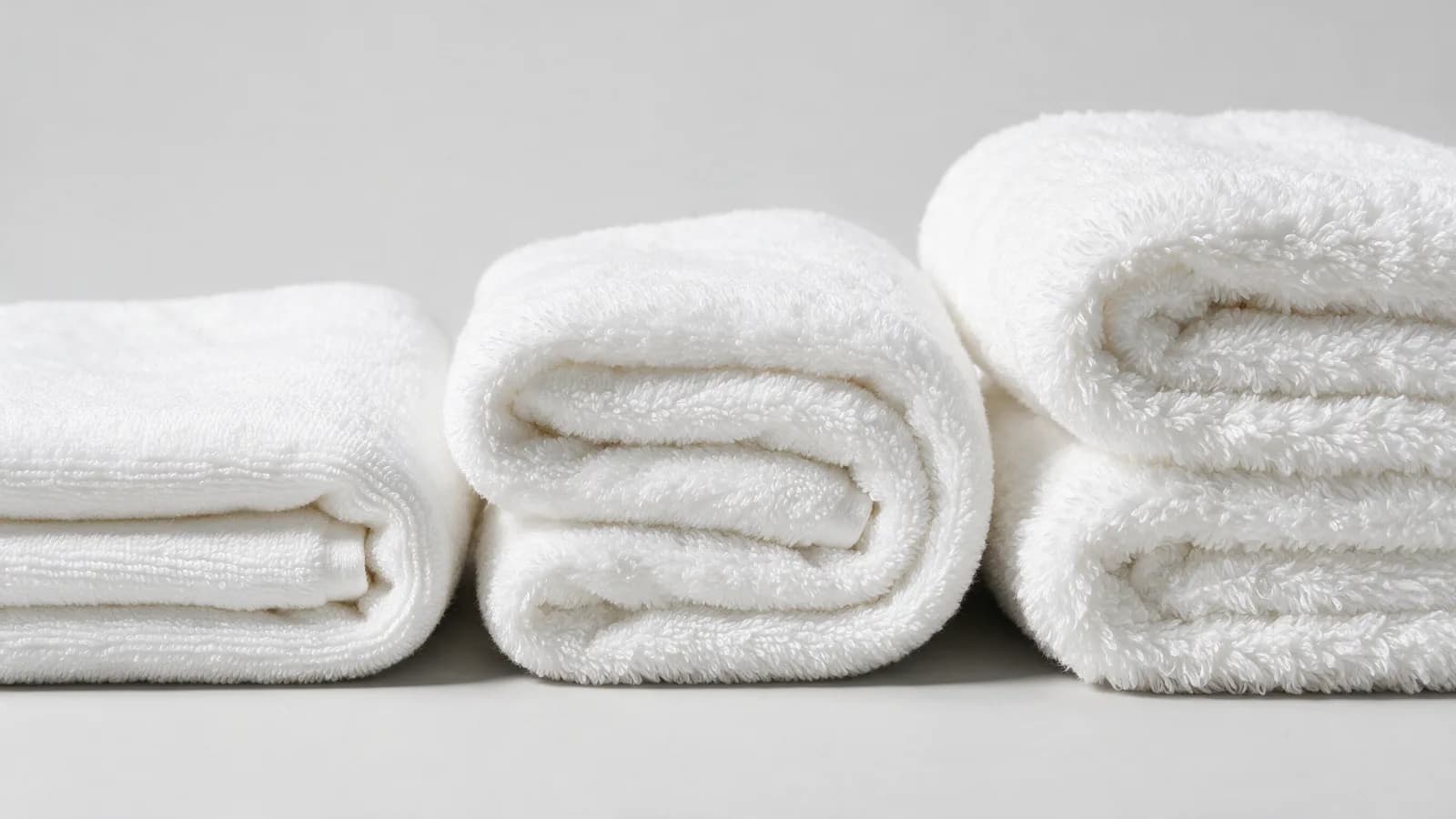
- ✓GSM is grams per square meter of fabric. Our 70 x 140 cm bath towel weighs 588 g (20.7 oz) at 600 GSM and 686 g (24.2 oz) at 700 GSM.
- ✓It is a density figure, not a quality figure. A heavy towel made of short fibers is still a towel made of short fibers.
- ✓600 GSM is the everyday weight for most homes. 700 is the plush end that still dries overnight if the bathroom has airflow. 800 and up is spa weight and needs a window, a fan, or a heated rail.
- ✓Dry time depends more on humidity and how the towel is hung than on the number on the label.
- ✓You can check any towel's real GSM in two minutes with a kitchen scale and a tape measure.
- ✓Softener and detergent build-up steal absorbency from any weight. Half the detergent, no softener, vinegar in the rinse every few washes.
What GSM actually measures
GSM stands for grams per square meter. It is the weight of one square meter of the finished fabric, dry, as it comes off the loom and through finishing. That is the whole definition. There is no committee behind it, no test for softness, no score. Take a square meter of terry, put it on a scale, read the number. (If you think in ounces per square yard, 600 GSM works out to about 17.7 oz/yd² and 700 to about 20.6 oz/yd².)
Because it is a per-area figure, the same GSM gives different piece weights depending on size. Our bath towel is 70 x 140 cm (27.5 x 55 in), which is 0.98 square meters. At 600 GSM that works out to 0.98 x 600 = 588 g (20.7 oz). At 700 GSM the same towel is 0.98 x 700 = 686 g (24.2 oz). Our bath sheet is 90 x 160 cm (35.4 x 63 in), or 1.44 square meters, so it comes to 864 g (30.5 oz) at 600 GSM and 1,008 g (35.6 oz) at 700. Those are the mill's spec weights for our pieces, and when I have weighed samples out of the bale they land within a few grams of the arithmetic, which is the reassuring thing about a number this simple.
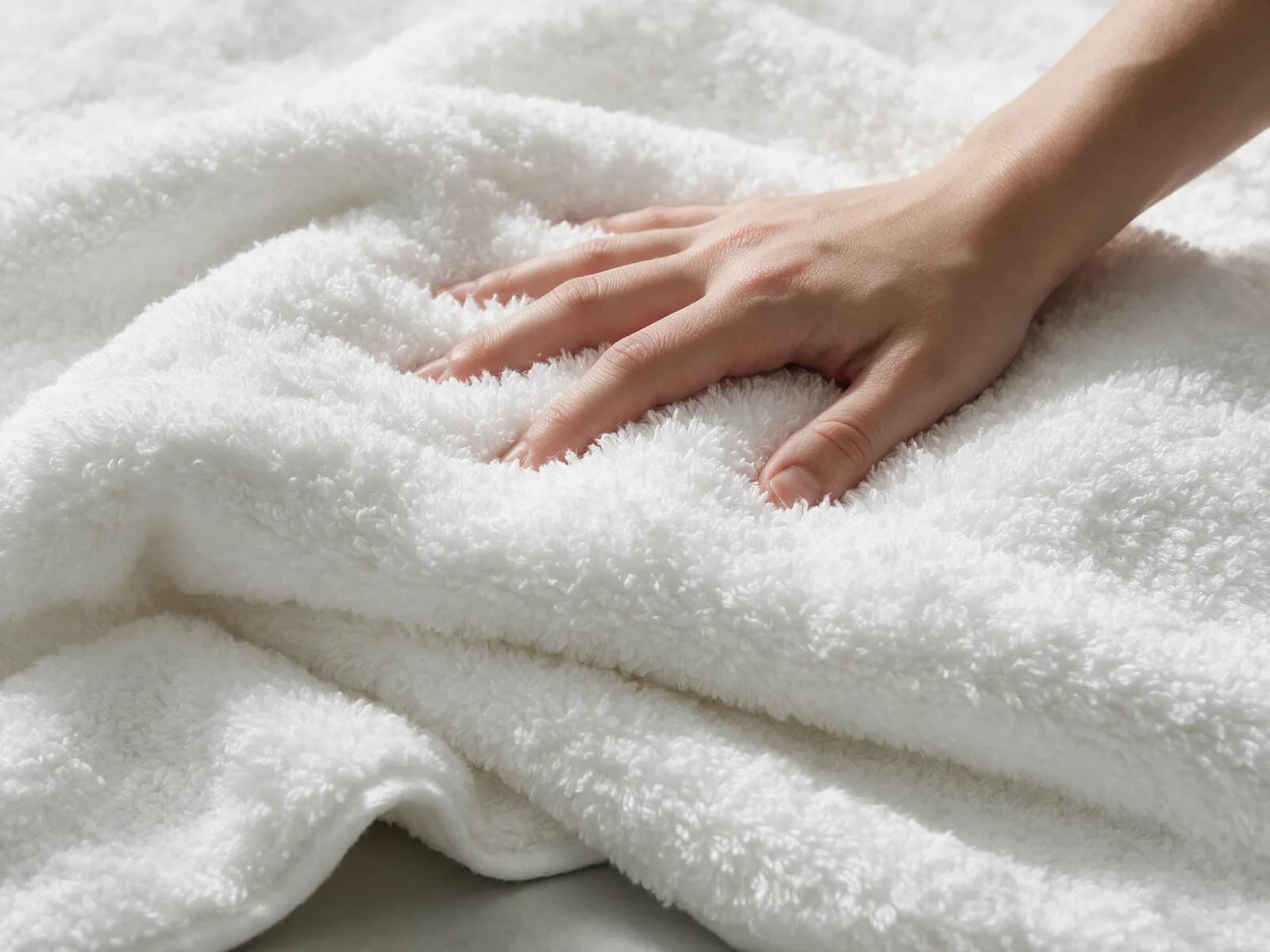
The mistake people make is reading GSM as a quality grade, the way thread count gets read on sheets. GSM tells you how much cotton is packed into each square meter. It tells you nothing about what that cotton is, how the yarn was spun, how the loops were formed, or what was sprayed on the towel at the finishing stage. A dense towel made of short fibers and a lighter towel made of long fibers can share a GSM and behave nothing alike after ten washes. I will come back to that. For now: GSM is a density figure. Weight per area. Useful, honest, and limited.
The towel GSM chart, 300 to 900+
The bands below are general textile-industry practice, not a standard anyone enforces. Mills round, brands round again, and a “600 GSM” from one loom can be a 560 from another. Treat the bands as neighborhoods rather than street addresses. The last column is where our own pieces sit.
| GSM | What it feels like | How it dries | Usually sold as | Who it suits | Our line |
|---|---|---|---|---|---|
| 300 to 400 | Thin and flat, closer to a large tea towel; short loops | Very fast, even on a hook | Quick-dry, travel and budget multipacks | Gym bags, camping, anyone who hates a damp towel more than they want a plush one | None |
| 400 to 550 | Light but proper terry; drapes easily, folds thin | Fast | Hotel, gym and most bulk household towels | High-turnover guest rooms, rentals, humid climates, commercial laundries | None |
| 600 | Plush with body; the fold has a rounded edge | Overnight in a normal bathroom | “Plush” and “hotel luxury” retail towels | Daily family use in most bathrooms | Signature, 600 GSM |
| 700 | Thick and heavy in the hand; the pile stands up | Overnight with a window, fan or heated rail | The upper end of retail; many “spa” ranges | People who want the wrap and have the airflow | Reserve, 700 GSM |
| 800 to 900 | Very thick; a fat fold that does not stack neatly | Slow; needs a spread-out hang and moving air | Spa and specialist ranges | Well-ventilated bathrooms and heated rails | Reserve was 800 until August 2026 |
| 900+ | Dense and mat-like; barely folds | Slowest | Bath mats | Underfoot, not for drying a person | Bath mat, 900 GSM |
Ranges are general textile-industry practice. Piece weights depend on size, so when two towels are different sizes compare their GSM, not their grams.
600 vs 700 GSM in the hand
A bath towel at 700 GSM carries 98 g (3.5 oz) more cotton than the same towel at 600. That works out to about 17% more fiber in the same 0.98 square meters. Terry holds water in proportion to how much cotton there is, so a 700 holds roughly 17% more water before it feels saturated. On a bath sheet the gap is 144 g (5.1 oz), because there is more area for the extra density to add up across.
Here is what that 17% feels like. Folded in four, the 700 stack is visibly taller. Across a shoulder it hangs rather than drapes. Against skin the loops stand up more, so you press into them instead of sliding across them. After a shower it sits heavier on the rail, and it takes longer to dry by roughly the proportion of extra water it is holding, all else being equal. All else is rarely equal, which is the subject of the drying section below.
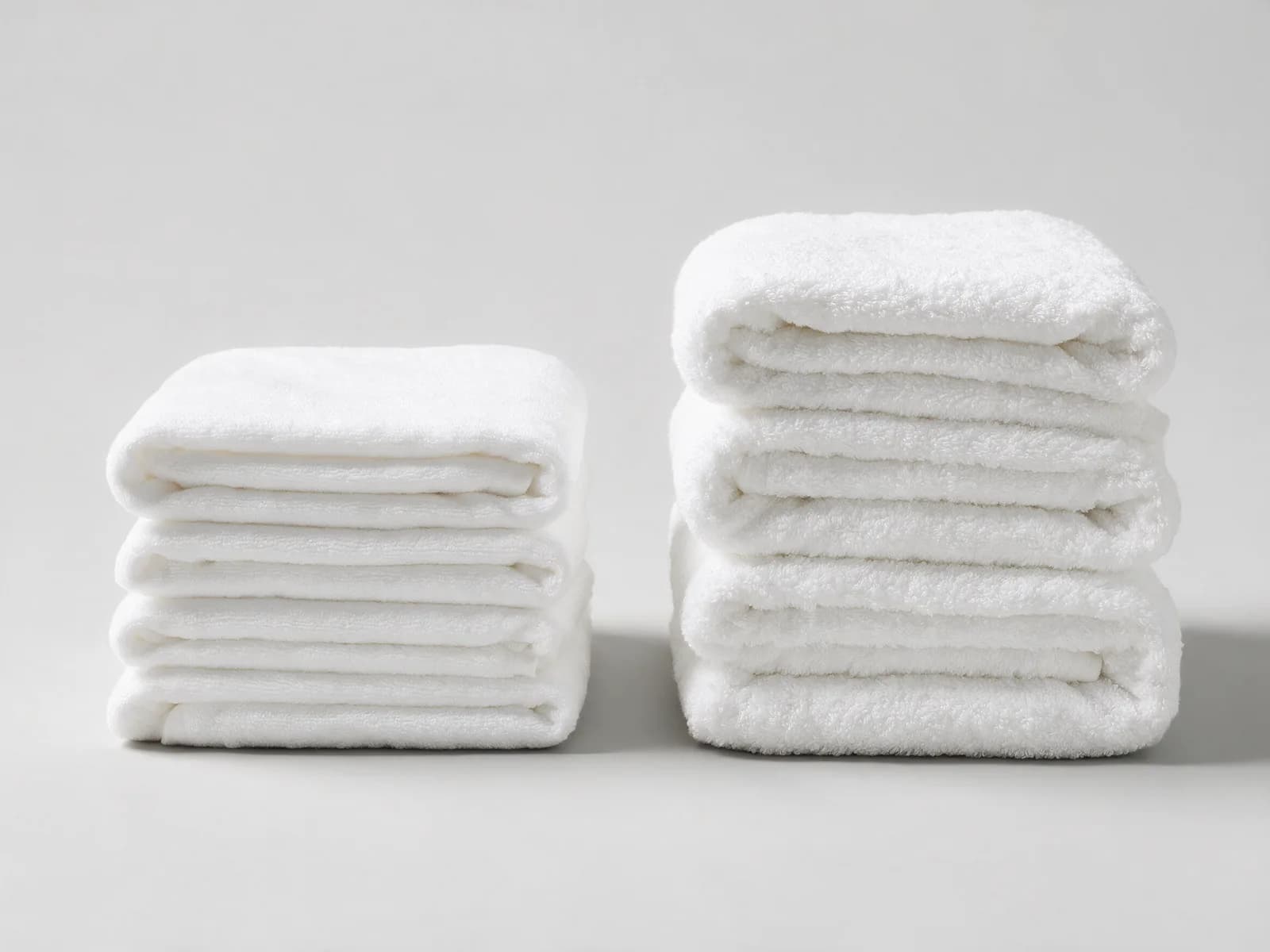
The people who prefer our 700 usually prefer it for the wrap rather than for the drying. A 600 dries you just as well; it simply does it with less towel around you. If you have ever stepped out of a bath and wanted the towel to feel like a blanket, that is the 700. If you have ever wanted the towel to get out of the way, that is the 600.
Why we moved Reserve from 800 to 700 GSM
Until August 2026 the Reserve line was 800 GSM. The bath towel weighed 784 g (27.7 oz) dry, which works out from 0.98 x 800. It was a great towel in the right room. In a bathroom with a window that opens, or an extractor fan that someone actually switches on, or a heated rail, an 800 dries overnight and feels like a spa towel every morning.
The problem is that many home bathrooms are not that room. Internal bathrooms in apartments, humid coastal cities, family bathrooms where three towels share one hook. The 800 pieces were slow to dry in those rooms, and I would rather say it plainly than dress it up: we were selling a towel that many of our customers' bathrooms could not dry overnight. A towel that is still damp at seven in the morning is not a plush towel. It is a damp towel, whatever the label says, and no amount of cotton pedigree fixes that.
So we went back to our mill in Sadat City, an industrial town about an hour northwest of Cairo, and reworked the Reserve at 700 GSM. The 700 keeps most of the plushness at about 12% less weight per piece (700 divided by 800). It is also easier to launder at home: a machine load of 700 GSM bath sheets is lighter, spins out more of its water, and comes out of the dryer sooner. Same long-staple Egyptian cotton, same zero-twist construction, same eight colors, same sizes. The Reserve line is certified by the Cotton Egypt Association, and that did not change either.
The honest trade-off: if your bathroom has real airflow and you liked the 800, the 700 is a little less towel. You will notice it in the fold. Most people will not notice it around their shoulders, and everyone notices the difference on the rail the next morning. I would make the same call again.
What actually decides how fast a towel dries
GSM gets blamed for slow drying, and it is part of the story, but a smaller part than people think. A wet towel dries by evaporation, and evaporation depends on the gap between the moisture in the towel and the moisture in the air, and on how fast that air moves past the pile. Four things dominate, and none of them are printed on the label.
- Humidity. A towel in a steamy internal bathroom with the door shut is drying into air that is already close to saturated. Nothing about the towel changes that.
- Airflow. An open window, an extractor fan left running for a while, a door propped open. Moving air keeps replacing the damp layer sitting against the pile with drier air.
- How it is hung. Spread out on a rail, a towel presents its whole area to the air. Bunched on a hook, most of that area is pressed against itself. The same 600 GSM towel can be dry by morning on a rail and still damp on a hook.
- Dryer load. An overloaded dryer tumbles towels in a ball, and the heavy ones in the middle take the longest. Half loads dry noticeably faster per towel.
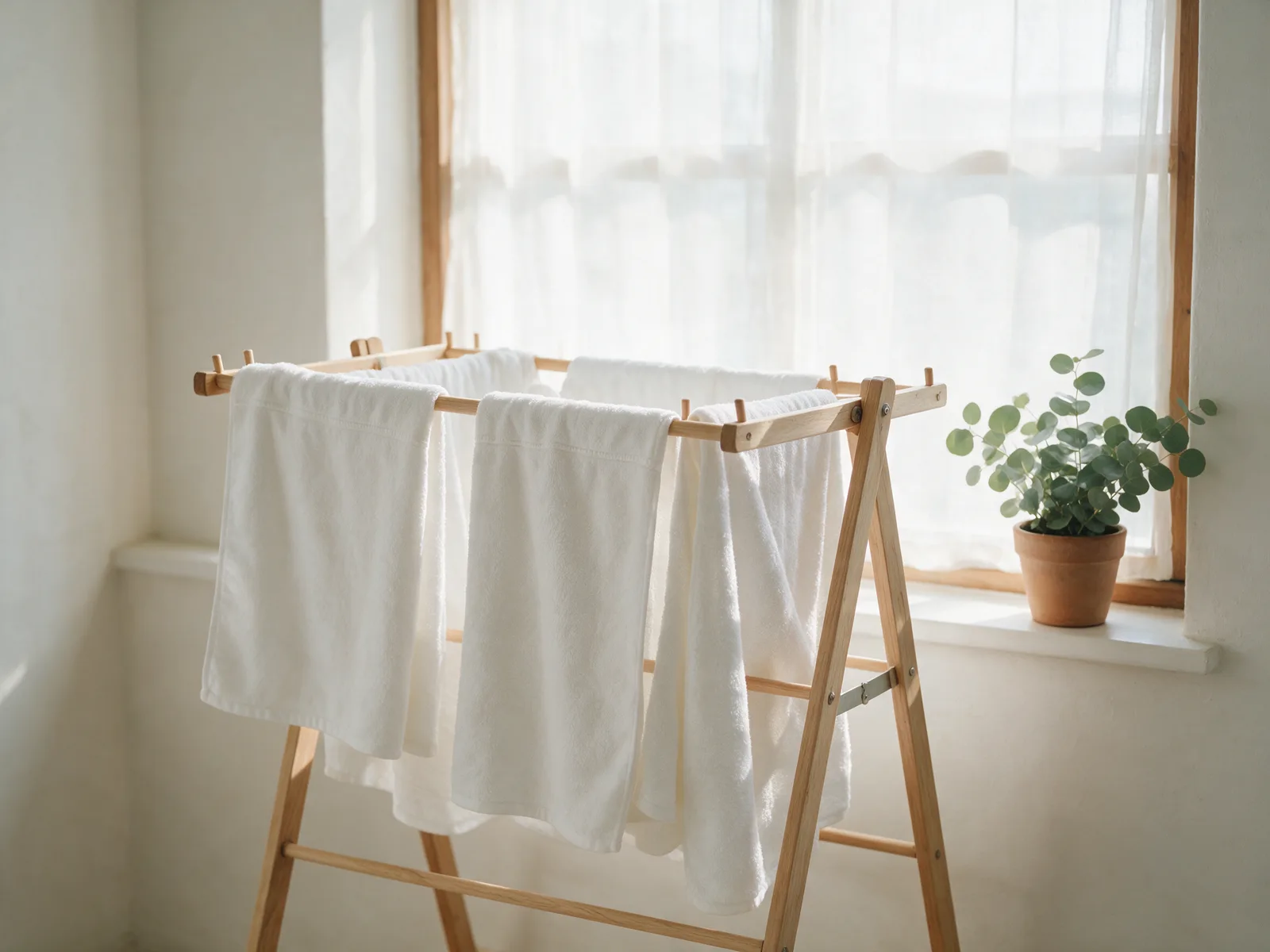
So here is the rule I actually use when someone asks which weight to buy. If your bathroom has no window and no fan, cap at 600 GSM and hang towels spread out. If it has a window that opens, an extractor fan you use, or a heated rail, 700 is fine and you will get the plushness without the damp. If you are not sure which kind of bathroom you have, it is the first kind, and 600 is the answer.
What GSM cannot tell you
Picture two towels, same size, same 600 GSM. One is long-staple Egyptian cotton, zero-twist loops, on a firm ground weave. The other is short-staple cotton, ring-spun tight, with a softener finish applied at the mill so it feels silky on the shelf. On day one the second one may well feel softer. After a few washes they have swapped places, and they keep drifting apart from there. GSM sees none of this. Four things it cannot see:
Fiber staple length
Staple is the length of the individual cotton fibers. Long-staple cotton spins into a yarn with fewer fiber ends poking out of it, so the yarn is smoother, sheds less, and holds together through repeated washing. Short-staple yarn is fuzzier and its loops break down sooner. A scale counts grams; it does not count how long each fiber is. Our cotton is long-staple Egyptian cotton, and the difference is not something you can feel in the store. It is something you notice a year in, when the towel is still the towel you bought.
Zero-twist versus ring-spun loops
In an ordinary ring-spun yarn, the fibers are twisted around each other to give the yarn its strength. Twist makes each loop firmer and slightly rope-like. Zero-twist does something different. During spinning and weaving the cotton fibers are held together by a soluble filament, a temporary binder. After weaving, the towel is washed and the filament dissolves, leaving loops of untwisted fiber standing up from the ground. Untwisted fiber has more surface exposed, so it wicks faster and feels softer against skin. The trade-off is lint. With no twist to lock the fibers in, some of the short ones work free in the first two or three washes. Ours shed a little then and settle. If you buy a zero-twist towel and find fluff in the lint trap for the first few washes, that is the construction working as designed, not a defect.
The ground weave
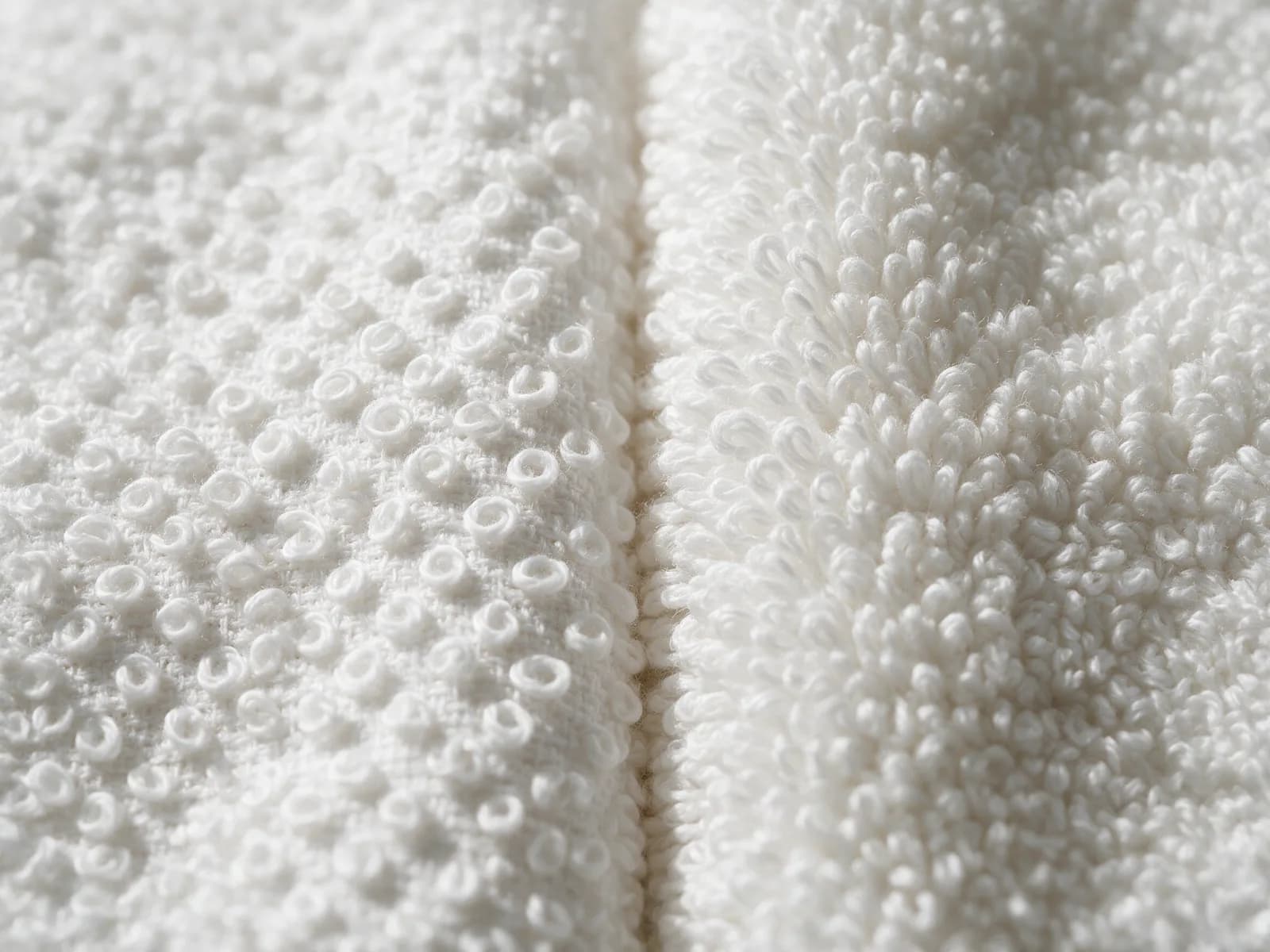
The loops are the terry pile, and the pile is what you feel. Underneath it is a flat woven base, the ground, and the ground carries the strength. GSM adds the two together. A towel can reach 700 GSM with a thin ground and a tall pile, or with a heavy ground and a shorter pile. The first feels plusher and wears out sooner, because loops pull free from a weak base. Hotel laundries push in the other direction, often specifying a cotton-polyester ground so the towel survives hot washes on a schedule. That is general practice, not any one hotel's spec, but it is why a hotel towel can feel thin and still last.
Finishing
The last step at any mill is finishing, and this is where shelf feel gets manufactured. Softeners applied at the mill make a towel feel silky in the store. They also wash out, typically in about three washes, and the towel underneath is what you actually bought: often stiffer and less absorbent than the one you handled. GSM cannot see finishing, and neither can your hand in a shop. Which is why the most useful advice I have is simple: wash a towel before you judge it.
How to check a towel's GSM at home
You do not need a lab. You need a kitchen scale that reads in grams and a tape measure. The towel must be fully dry, so give it a day after washing before you weigh it. Washing shrinks a towel a little and takes some lint and finish with it, so weight and area both drop, but they drop together and the ratio stays close.
Now the awkward case. A towel is labeled 700 GSM and measures 70 x 140 cm, so it should weigh about 686 g. It weighs 490 g. That is 500 GSM. Before you write the angry email, check three things. First, the size: labels round sizes too, and a smaller towel at a true 700 weighs less than you expect. Second, moisture: a towel that came out of the dryer an hour ago has not finished. Third, the margin: a few percent below spec after washing is normal. I would not argue about 20 or 30 g. I would argue about 200. If it is still hundreds of grams short of its own label once you have allowed for all of that, the label is wrong, and that is a fair reason to return it.
This is also how I check our own pieces. When a new production run arrives I take a bath towel out of the bale, weigh it, and expect to see something within a few grams of 588 or 686. It is the cheapest quality test in the business, and the fact that it is available to every customer keeps everyone honest, including us.
Which weight for whom
Recommending by use case is the only honest way to do this. Below is how I would answer if you told me about your bathroom rather than your budget.
- Daily family use, a normal bathroom: 600 GSM. Dries overnight, survives frequent washing, and costs less per towel, so you can own more of them. More towels in rotation means each one is washed less often, which is the single biggest thing you can do for a towel's lifespan.
- Guest bathroom: 600, or 700 if you know the room has a window. Guests tend to hang towels badly, so lean toward the weight that forgives a hook.
- Small or humid bathroom with no window: 600, hung spread out. Skip 700 unless you are also fixing the airflow, because you will be fixing the airflow either way.
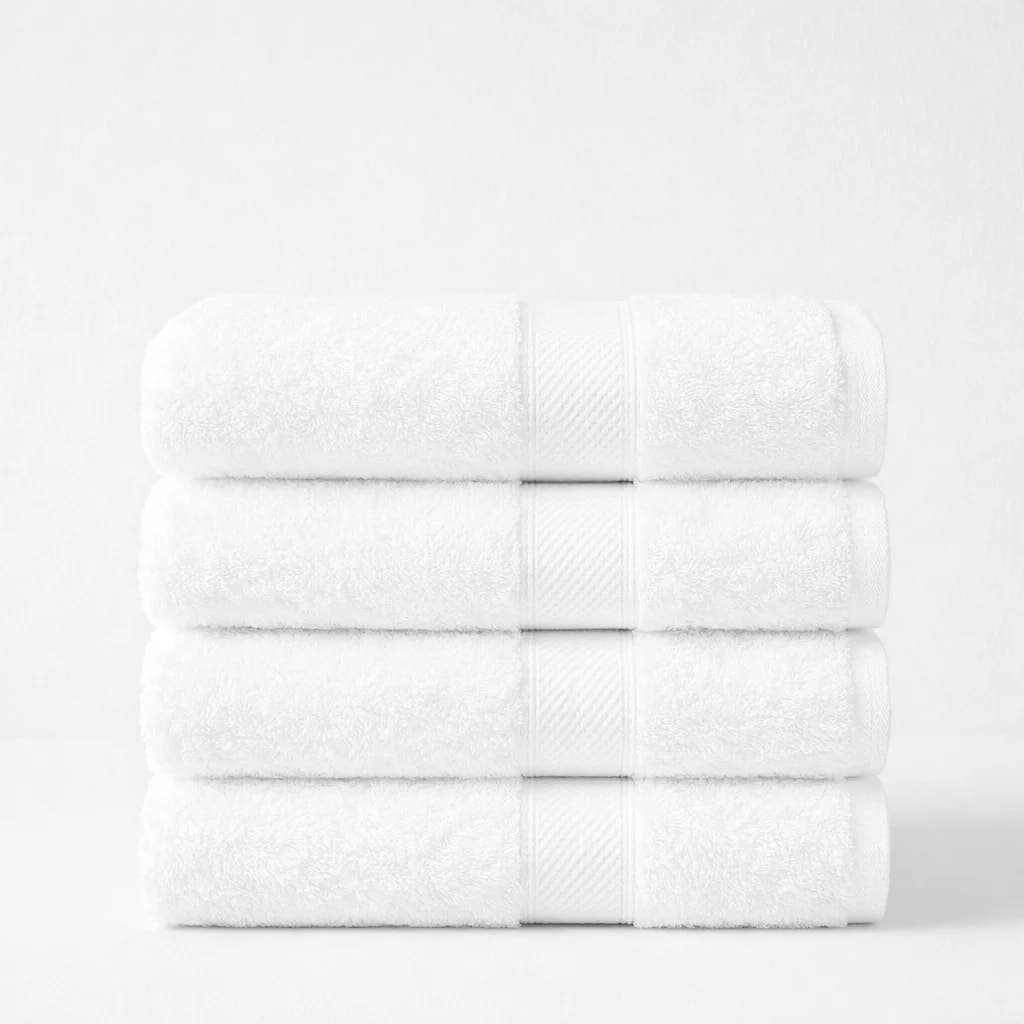
For most bathrooms
Signature Bath Towel, Set of 4
600 GSM, 70 x 140 cm (27.5 x 55 in), 588 g each · $162.95
The default. If your bathroom dries a towel by morning today, it will dry this one. If you are choosing between the two lines and cannot decide, this is the one I would buy for myself.
See the set- Gym or travel: lighter than either of our lines. A 400 to 550 GSM towel that lives in a bag needs to dry fast far more than it needs to feel plush. We do not make one, and I would not use one of ours for that.
- Spa at home: 700, with a rail or hook per towel and a bathroom that can move some air. The plushness only counts if the towel is dry when you reach for it.
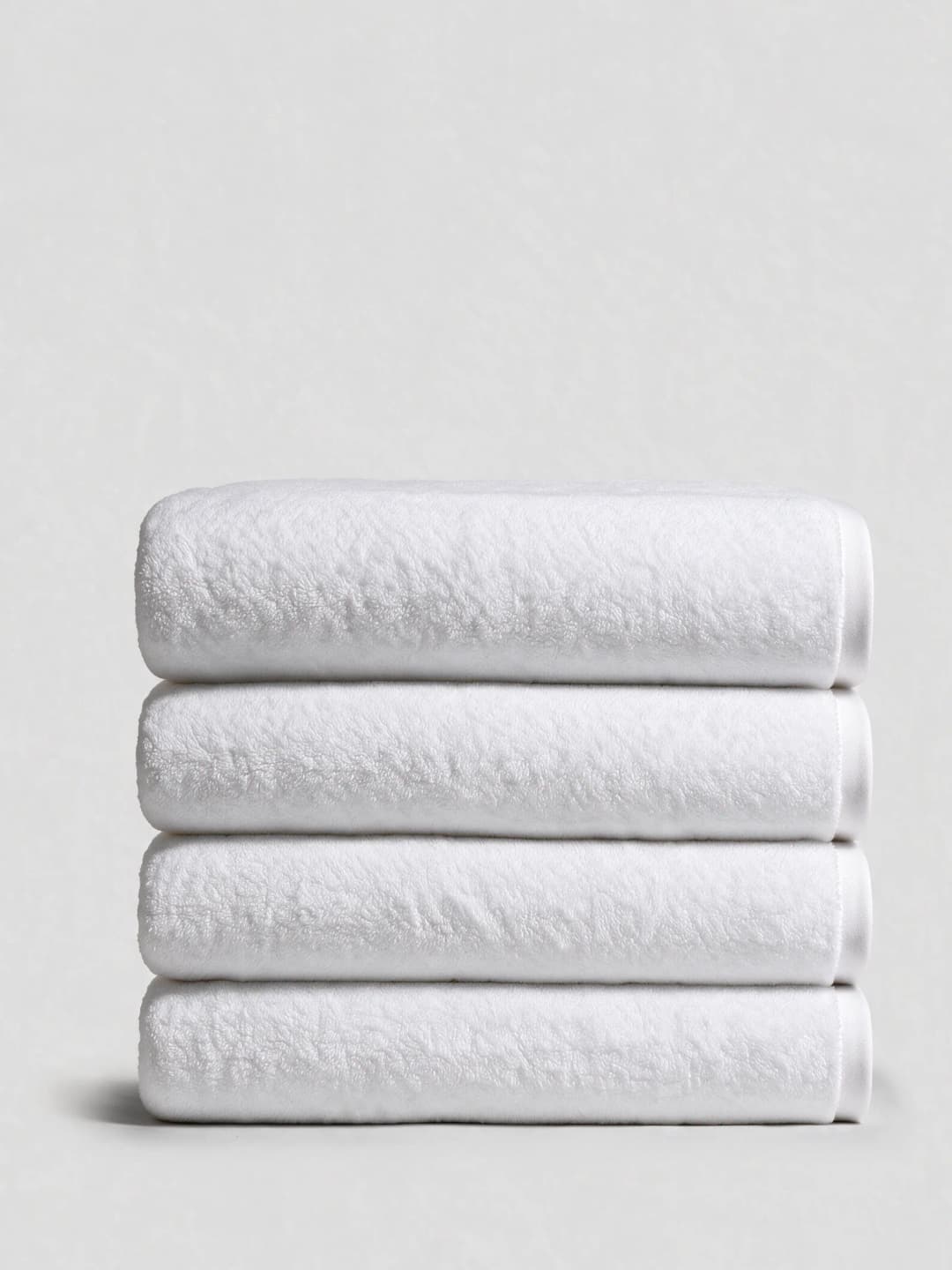
For bathrooms with airflow
Reserve Bath Towel, Set of 4
700 GSM, 70 x 140 cm (27.5 x 55 in), 686 g each · $299.95
For a bathroom with a window, a fan you use, or a heated rail. If yours has none of those, stay with Signature; the extra 98 g per towel will spend its mornings damp.
See the set- A big, heavy wrap: the 700 GSM bath sheet, 1,008 g (35.6 oz) dry. It is 90 x 160 cm (35.4 x 63 in), so it goes around most people with room to tuck. Understand the drying commitment before you buy it, and give it its own rail.
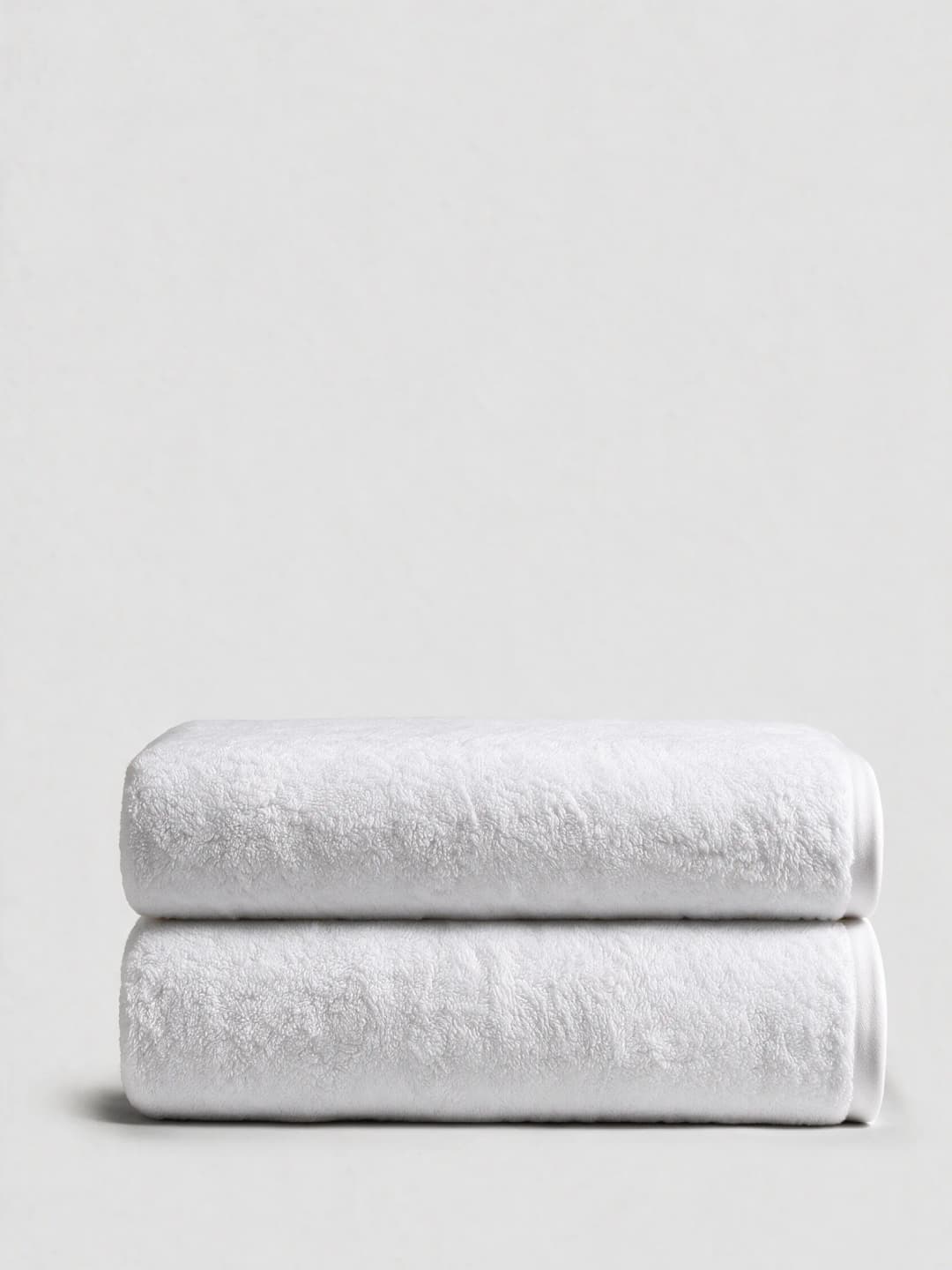
For the wrap
Reserve Bath Sheet, Set of 2
700 GSM, 90 x 160 cm (35.4 x 63 in), 1,008 g each · $199.00
The heaviest thing we make apart from the bath mat. Buy it for the feeling of being wrapped, not for speed; two of these on one hook will not be dry by morning anywhere.
See the setWhichever weight you choose, everything we make is woven in Egypt and ships from Egypt, so it is not next-day. Duties and import taxes are included in the price and there is nothing to pay on delivery. Standard shipping is free on orders over $99, and express is $39.95.
Keeping the weight useful
GSM is only the starting weight. The cotton in a towel does not change much over its life. What changes is what is coating it. Fabric softener leaves a film on the fiber that repels water, and detergent used at full dose builds up in the pile wash after wash. Between them they can make a 600 feel like something lighter and stiffer, and make a 700 feel like a 600 that has given up. The routine that keeps the weight you paid for working as weight is short:
- Wash new towels once before use. It clears loose lint and whatever finish came from the mill.
- Wash warm, 40C (104F). Hot enough to lift body oils, not so hot that it shortens the fiber's life.
- Use half the detergent the box tells you to. Towels are not that dirty, and the excess stays in the pile.
- No fabric softener, ever. It coats the fiber and kills absorbency, and it is the most common reason a good towel stops working.
- Tumble low or line dry. High heat is hard on cotton, and a towel that is tumbled hot every week goes flat sooner.
- White vinegar in the rinse every few washes. It strips the detergent build-up that softener-free washing still leaves behind.
- Wash dark colors separately for the first two washes.
Do that and a 600 stays a 600. Skip it and the number on the label becomes a memory of the towel rather than a description of it.
Questions I get asked
What is 600 GSM in towels?
GSM is grams per square meter, so a 600 GSM towel has 600 g of cotton in every square meter of fabric. For a 70 x 140 cm (27.5 x 55 in) bath towel that works out to 588 g (20.7 oz) dry. In practice 600 is the weight most people mean by a plush everyday towel: noticeably thicker than a hotel or gym towel, and still light enough to dry overnight in a normal bathroom. Our Signature line is 600 GSM.
Is 700 GSM better than 600 GSM?
It is heavier, not better. A 700 GSM bath towel carries about 17% more cotton than a 600 of the same size, so it holds roughly that much more water, feels thicker, and takes longer to dry. If your bathroom has a window, a fan, or a heated rail, 700 gives you a plusher towel without a damp one. If it has no airflow, 600 will serve you better every morning. Fiber quality matters more than the gap between these two numbers.
What GSM do hotels use?
Most hotel and gym towels sit around 400 to 550 GSM. That is a general industry range, not any particular hotel’s spec. Hotels choose lighter towels because they are washed at high temperatures on a schedule, need to dry fast in commercial dryers, and are replaced in matching white sets. Many hotel programs use a cotton-polyester ground weave for durability. The plush towel you remember from a hotel spa is usually a heavier, separate range.
What GSM is too heavy for a towel?
For a home bathroom without a window or fan, anything above 600 GSM tends to stay damp into the next day, and that is the point where weight stops being a benefit. With good airflow or a heated rail, 700 dries overnight and 800 can too if it is hung spread out. Above 900 GSM you are in bath mat territory: fabric meant to sit on the floor, not to dry a person. We moved our Reserve line from 800 to 700 GSM in 2026 for exactly this reason.
Do heavier towels last longer?
Not by themselves. Durability comes from fiber length, the strength of the ground weave the loops are anchored in, and how the towel is washed. A heavy towel made from short-staple cotton on a thin ground will shed loops and go flat sooner than a lighter towel with long-staple fiber and a firm base. Heavier towels also spend more time damp, which is hard on any cotton. Buy the fiber and the construction first, then the weight.
Why is my heavy towel not absorbent?
Almost always it is a coating, not the cotton. Fabric softener leaves a film on the fiber that repels water, and detergent used at the full dose builds up in the pile. Some towels also arrive with a mill softener finish that feels silky and resists water until it washes out. Wash the towel warm at 40C (104F) with half the usual detergent, no softener, and add white vinegar to the rinse to strip the build-up. It usually recovers within a few washes.
How do I know the GSM on the label is real?
Weigh it. Dry the towel fully, weigh it in grams on a kitchen scale, measure its length and width in centimeters, and divide the weight by the area in square meters. A 70 x 140 cm towel labeled 700 GSM should weigh about 686 g. Expect a small drop after washing from lint and shrinkage. If a labeled 700 comes in around 490 g, that is 500 GSM, and the label is wrong.
Keep reading
Bath towel sizes explained
Bath towel, bath sheet, hand towel and washcloth dimensions, and why the same GSM weighs so differently across them.
What towels do hotels use
Why hotels pick lighter, white, cotton-polyester towels, and what that means if you want the hotel feel at home.
How to buy Egyptian cotton towels
Fiber length, construction, weight and care: what actually matters when you compare Egyptian cotton towels.