What Towels Do Hotels Use? GSM, Cotton, Sizes, and Why They Are Always White
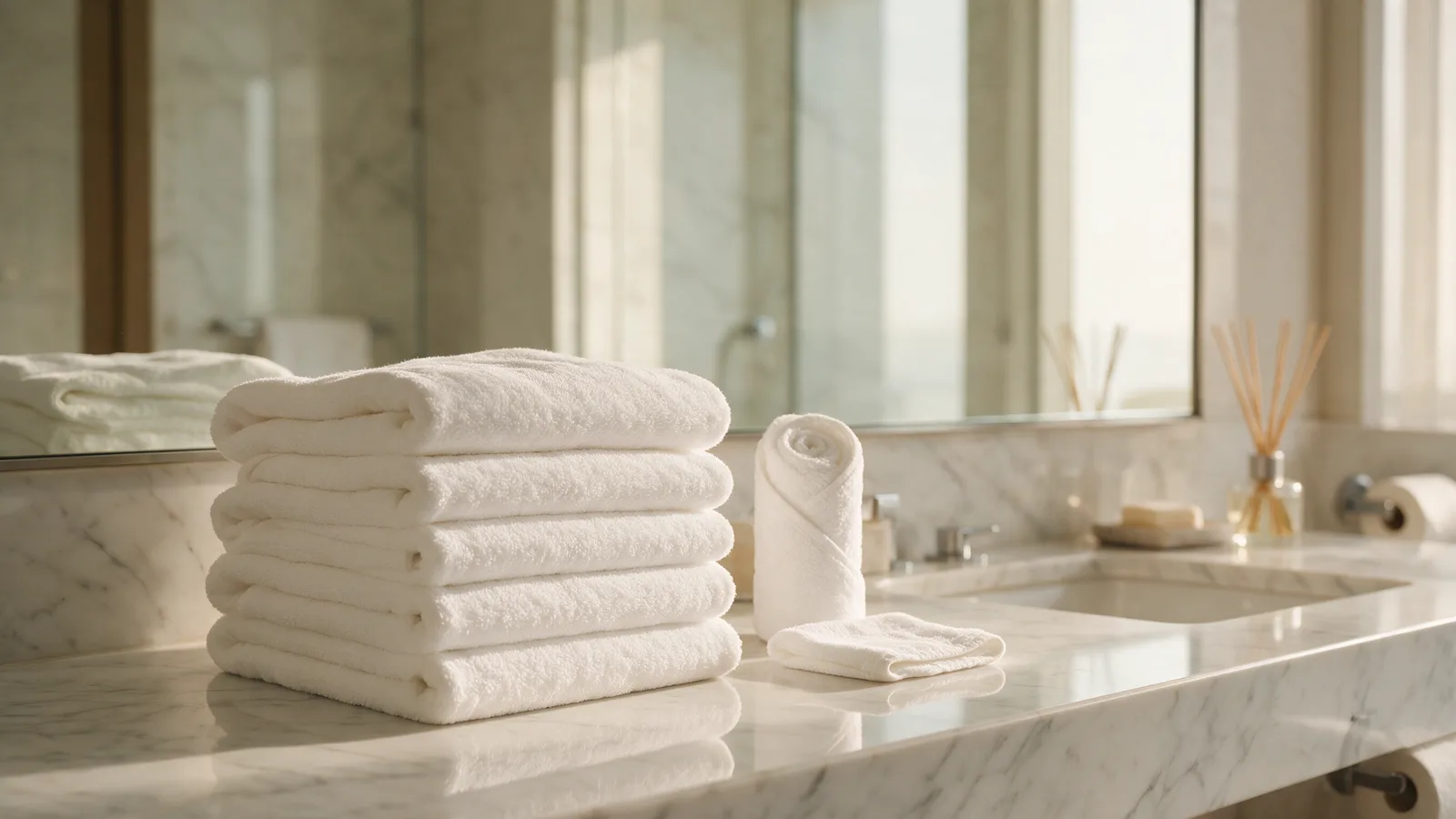
People ask us this more than almost anything else, usually a few days after a good hotel stay: what were those towels, and where can I buy them? The honest answer is less glamorous than the towel. Most hotels buy a fairly ordinary cotton towel, in white, by the hundred, and then treat it in a way you never could at home.
This is what I have learned about the hotel towel trade from the mill side of it, and what I think actually transfers to a home bathroom. I sell towels, so read the product mentions with that in mind. The care routine at the end is free.
By Adam, Founder of Kemet Cotton · Updated August 2026 · 17 min read
The short version
- ✓Most hotel towels sit around 400 to 550 GSM, lighter than most home towels, because a hotel pays for dryer minutes and wash cycles, not plushness.
- ✓They are white because white survives hot washes and bleach, hides nothing, and lets any towel replace any other.
- ✓The "hotel feel" is mostly commercial laundering plus early retirement. The towel is the smaller part of it.
- ✓"Hotel collection" and "hotel style" have no definition behind them. Check the stated GSM, fiber, ground weave and true size instead.
- ✓Hygro (hollow-core) yarn and long-staple Egyptian cotton solve different problems: one is a way of spinning the yarn, the other is the fiber.
- ✓At home you can afford a heavier towel than any hotel would buy. A vinegar rinse and a towel bar get you most of the rest.
The short answer
The one-paragraph version: most hotels use a white cotton terry towel somewhere around 400 to 550 GSM, often woven on a cotton-polyester ground with a cotton pile, in a bath towel of about 27 x 54 in (roughly 70 x 137 cm), with hand towels around 16 x 30 in (about 41 x 76 cm) and washcloths around 13 x 13 in (about 33 x 33 cm). They are bought by the hundred from hospitality suppliers, laundered on site or by a contractor, and replaced on a schedule rather than when they fall apart. All of that is general industry practice. Individual properties vary, and I am not going to pretend to know any named hotel’s spec sheet.
GSM is grams per square meter of fabric: a plain measure of how much cotton is in the towel (there is a fuller treatment in our towel GSM guide). Roughly 400 to 550 is the working range for hotels and gyms, most “plush” towels sold for home use are 600 to 700, and 800 and above is spa weight. A hotel towel is, by home standards, on the light side. That surprises people, because the towel they remember felt thick.
Here is the part I want to say plainly, because the rest of this guide hangs on it: the hotel feel is mostly the laundry and the rotation, not the towel. A fully dry, chemically stripped, one-year-old towel of ordinary weight feels better than a five-year-old heavy towel washed with fabric softener and dried doubled over on a hook. Hotels are very good at the first thing and never let the second thing happen.
| Piece | Typical hotel cut | Kemet Cotton (both lines) |
|---|---|---|
| Bath towel | 27 x 54 in (about 69 x 137 cm) | 70 x 140 cm (27.5 x 55 in) |
| Hand towel | 16 x 30 in (about 41 x 76 cm) | 35 x 75 cm (13.8 x 29.5 in) |
| Washcloth | 13 x 13 in (about 33 x 33 cm) | 30 x 30 cm (11.8 x 11.8 in) |
Hotel figures are typical cuts across the hospitality trade, not any one property’s spec. Our bath towel is a little larger than the hotel cut; our hand towel is narrower and our washcloth slightly smaller, which is worth knowing if you are matching an existing set.
Why hotel towels are white
Everyone has a theory about white hotel towels. Most of the theories are right at the same time.
- Hot washes and chlorine bleach without visible damage. A white towel has no dye to fade, so the laundry can run it as hot as the fiber allows and bleach it when it needs to. A colored towel washed that way would look tired within weeks.
- Mismatched sets are invisible. Hotels buy towels in batches over years. Two whites from different batches look the same on a shelf. Two “sand” towels from different dye lots do not.
- Stains show, so they get pulled. A white towel with a mark on it is obvious and gets retired or moved to the back of house. On a dark towel the same mark is invisible and the towel stays in a guest room.
- Any towel replaces any other. Housekeeping never has to match a bath towel to the hand towel already in the room. It is one stock item, folded one way, on one cart.
- The guest reads white as clean. This is the least technical reason and probably the most important one to the people who choose the linen.
There is a smaller version of that logic for a company our size. Our mill dyes yarn in lots of at least 300 kg per color, which is why we run eight colors rather than twenty, and why Pure White is the color we are least likely to run out of: it skips the dye-lot question almost entirely. Every time I flip through the mill’s swatch book I am tempted by another blue, and then I picture 300 kg of it in a warehouse waiting for someone to want it.
Why a hotel towel feels the way it does
Commercial laundering is a different process from anything that happens in a home machine. In general terms, a typical hotel cycle runs hot, uses a strong alkaline detergent, uses no fabric softener, follows with a “sour” rinse (a mild acid) that neutralizes the alkali left in the fabric, and then tumbles the towels completely dry. There is no hang-it-on-the-hook-and-hope step anywhere in that sequence.
What that does to a towel is strip everything off the fiber that is not cotton. Detergent build-up, body oils, the silicone film that fabric softener leaves behind, all of it goes. The loops of the pile are left clean and open, and open loops are what absorbency is. The sour rinse matters more than it sounds: alkaline residue left in cotton feels harsh and pushes whites toward yellow, so neutralizing it is part of why the towel feels pleasant and looks bright.
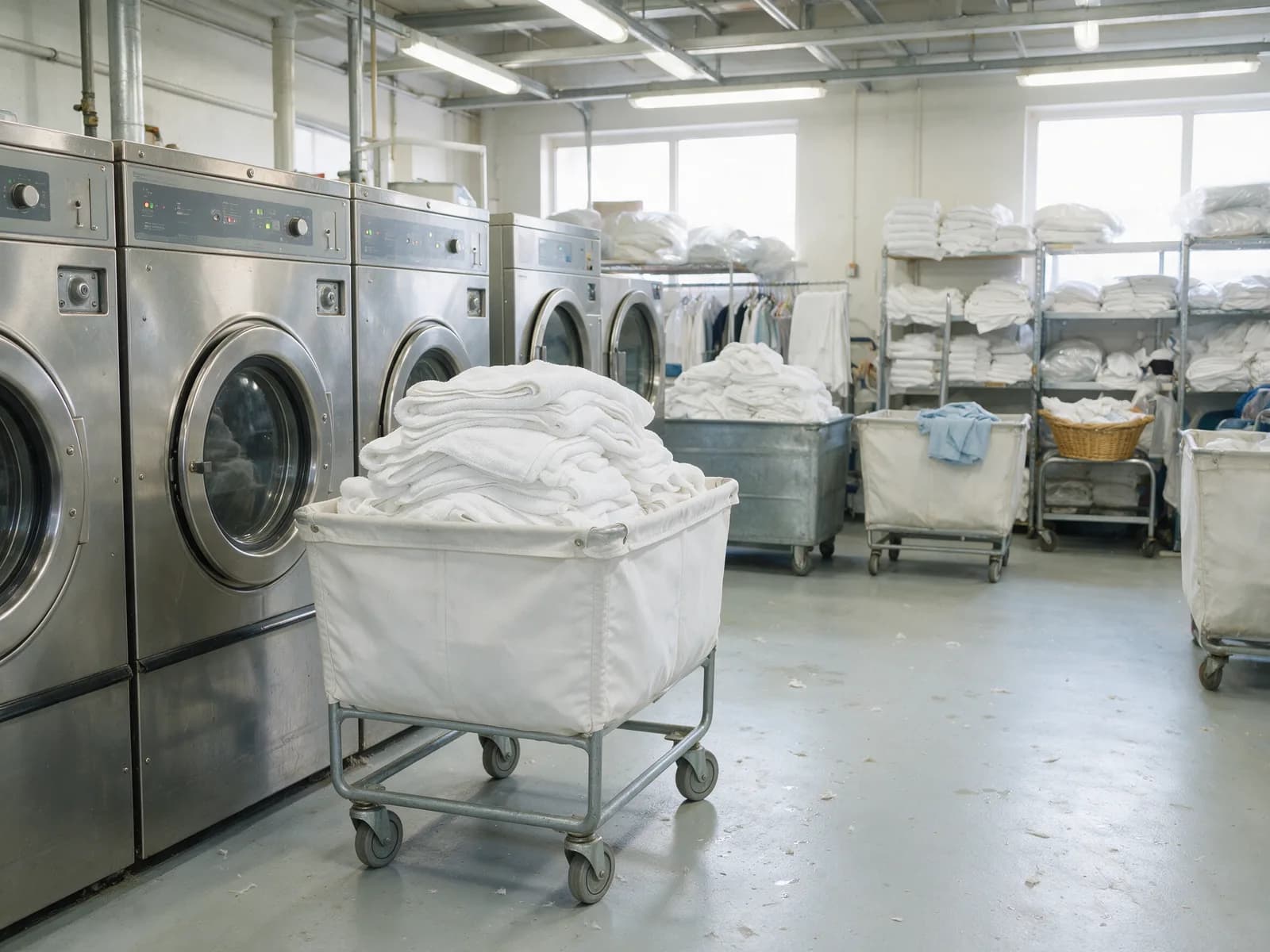
Then two things that are about rotation rather than chemistry. Every hotel towel you meet is fully dry, because it came straight out of a dryer and sat folded on a cart, not half-dry on a hook after someone else’s shower. And hotel towels are retired early, on a schedule, when they go thin or gray or the edges fray, because a tired towel in a room is a complaint waiting to happen. So you rarely meet a five-year-old hotel towel. You meet a young one that has been washed a great many times in the best possible way.
Now the home version. Fabric softener on every load, which coats the fiber and kills absorbency. A bath towel doubled on a hook, still damp the next morning. A set that has been in service since a previous apartment. Same cotton, completely different life. If you take one thing from this guide, take the routine in the last section, because it costs nothing.
Hotel economics versus your bathroom
A hotel buying towels is optimizing three things: drying time (dryer minutes cost money and slow the whole laundry down), durability through hundreds of washes, and cost per wash. Every one of those pushes the weight down. A lighter towel dries faster and costs less per piece, and the cotton-polyester ground under the pile carries the strength through all those cycles. That is why the 400 to 550 GSM range exists: it is a good towel for a business that washes it every single day.
You wash a towel maybe twice a week. You do not pay for dryer minutes by the thousand. What you want is for the towel to feel good for the thirty seconds you use it and to be dry again by the next shower. That is a completely different optimization, and it is why home towels sit at 600 to 700 GSM and can go higher.
The arithmetic is simple, because weight is GSM times area. A typical hotel bath towel at 27 x 54 in is about 0.94 m2, so at 400 to 550 GSM it works out to roughly 375 to 520 g dry. Our bath towel is 70 x 140 cm, which is 0.98 m2, so the Signature at 600 GSM works out to 588 g (0.98 x 600) and the Reserve at 700 GSM to 686 g. Those are the mill’s spec weights; when I weighed sample pieces on a kitchen scale they landed close enough that I stopped checking. The Reserve carries about 17% more cotton than the Signature and holds roughly that much more water. Against a hotel towel at the top of its range, it carries about a third more.
| Bath towel | GSM | Area | Dry weight |
|---|---|---|---|
| Typical hotel towel, 27 x 54 in | 400 to 550 | about 0.94 m2 | roughly 375 to 520 g |
| Signature, 70 x 140 cm | 600 | 0.98 m2 | 588 g |
| Reserve, 70 x 140 cm | 700 | 0.98 m2 | 686 g |
Hotel row is a typical range across the trade, not a specific property. Weight = GSM x area; our figures are the mill’s dry spec weights out of the bale.
The honest version of what that means: a heavier towel is a worse hotel towel and a better home towel. Worse for a hotel because it sits longer in the dryer and costs more per wash. Better at home because there is simply more towel against your skin, and you have all day for it to dry. We learned the limit of this ourselves. Until August 2026 our Reserve line was 800 GSM, and the 800 pieces were slow to dry in most home bathrooms, particularly the ones without a window or a fan. We moved the line to 700, which keeps most of the plushness at about 12% less weight per piece and is easier to launder at home. If your bathroom never really dries out, the lighter line is the smarter buy, and I say that as the person who sells the heavier one.
What “hotel collection” and “hotel style” actually mean
Nothing regulated. No standards body defines a hotel towel, so “hotel collection”, “hotel style” and “hotel quality” are put on a product by whoever is selling it, and in practice they usually mean “white, with a woven border, and we would like you to think of a nice hotel”. Some hotel programs do sell the actual towels used in their rooms, which is a legitimate thing to buy if you liked that specific towel. But the phrase on its own tells you nothing about what is in the bag, and a true hotel towel is a light one.
Four things to check instead, in the order I would check them:
- Stated GSM. If a “hotel collection” towel lists no GSM, that is the first question to ask. Real hotel towels sit at 400 to 550; if it says 600 or above, it is a home towel wearing a hotel label, which may be exactly what you want.
- Fiber and staple length. “100% cotton” is a floor, not a spec. Long-staple cotton spins into a smoother, stronger yarn with fewer fiber ends; short-staple cotton gives you more ends, which is what pills and sheds. A listing that names the cotton is telling you more.
- Ground weave. The loops you feel are the pile; the strength lives in the ground weave underneath. Many hotel towels use a cotton-polyester ground for durability in commercial laundry, a reasonable choice for a laundry rather than a flaw. For home use an all-cotton ground is softer and absorbs on both faces.
- True size. A “hotel” bath towel is often the 27 x 54 in cut. A 70 x 140 cm towel is close but not the same, and “bath sheet” can mean anything from 90 x 150 cm to 35 x 70 in depending on who is selling it. Check the dimensions, not the name; our towel sizes guide lays the common cuts side by side.
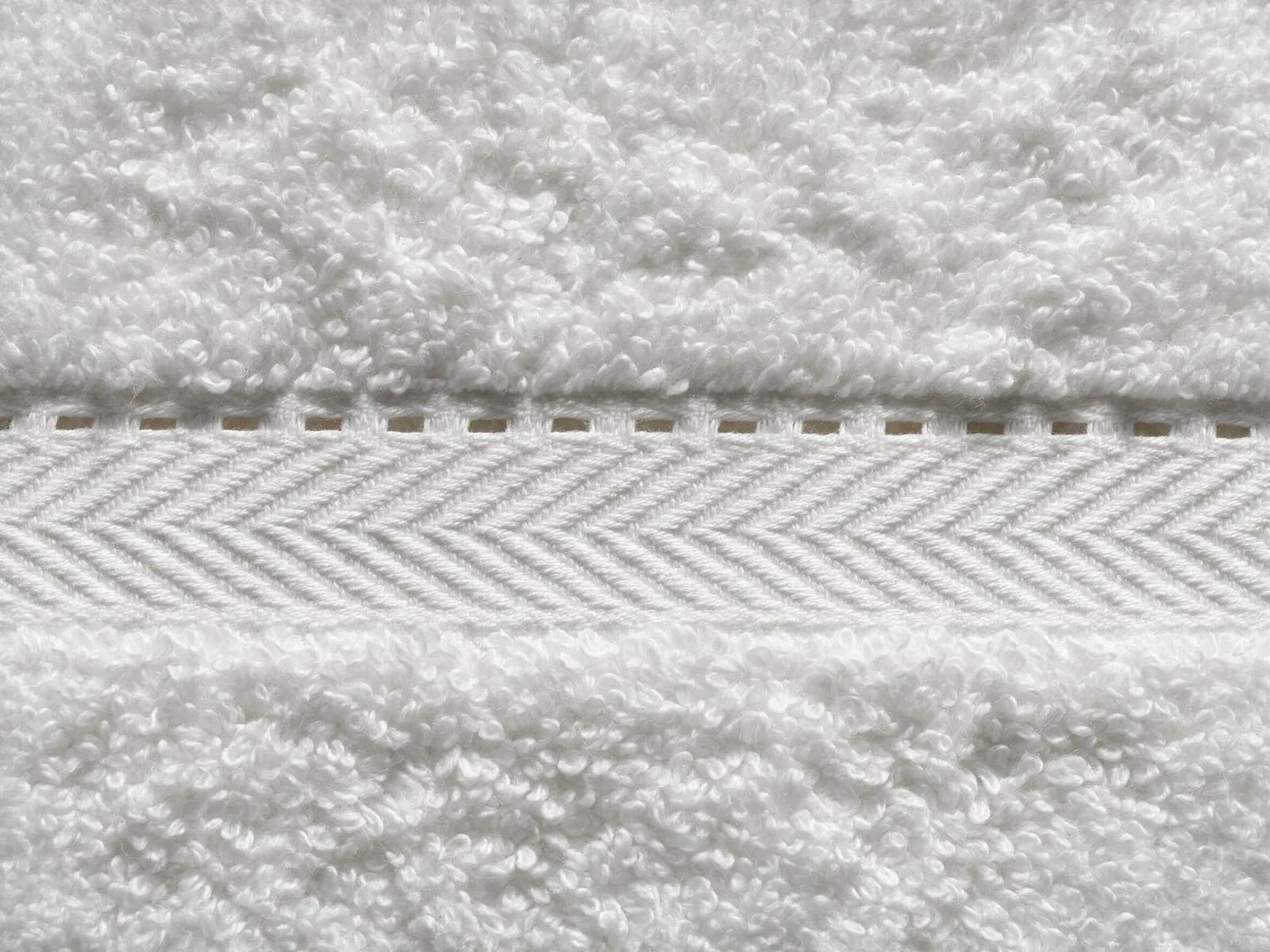
On that border, since it is the most recognizable “hotel” feature: a dobby border is the flat band near each end where the loops stop and the fabric is woven plain, sometimes with a small pattern. It looks smart, which is most of why it is there, and it also stops the ends stretching and going wavy in the wash. It is not a mark of quality by itself; a cheap towel can have a beautiful border.
Hygrocotton versus Egyptian cotton
This comes up because a lot of hotel-program towels are sold on a hollow-core yarn, often under a trademarked “hygro” name, while Egyptian cotton towels are sold on the fiber. People assume these are competing claims and want to know which wins. They are not really comparable: one describes how the yarn is spun, the other what it is spun from.
A hygro or hollow-core yarn, as a general description, is spun so that the center of the yarn is open and traps air. That gives the towel loft at a lower weight, lets it dry faster than a solid yarn of the same size, and tends to make it fluffier after the first few washes as the core opens up. It is an elegant answer to the hotel problem: a lighter towel that still feels thick in the hand and comes out of the dryer quickly.
Long-staple Egyptian cotton is a different kind of claim. It is about the length of the fiber. Longer fibers spin into a yarn with fewer loose ends, and fewer ends means a smoother, stronger yarn that lints less, pills less, and in our experience gets softer with washing rather than harsher. It is a fiber, not a construction. Both of our lines are 100% Egyptian cotton from one mill in Sadat City, an industrial town about an hour northwest of Cairo; the Reserve line is certified by the Cotton Egypt Association.
So who is each for? If you want a light towel that lofts and dries fast at a hotel-like weight, and you launder often, a hollow-core yarn is doing exactly that job and I have no interest in talking you out of it. If you want density, a smooth hand, and a towel that improves over years of washing, long-staple cotton at 600 to 700 GSM is the better fit. Our towels take a third route to soft, open loops: zero-twist, where the yarn is held together during weaving by a soluble filament that washes out, leaving loops of untwisted fiber. That is also why they shed a little lint in the first two or three washes.
Getting the hotel feel at home
Most of this is not about buying anything. It is the home version of what the hotel laundry does with much bigger machines.
- Wash warm, 40C (104F). Hot enough to clear body oils, not so hot that it shortens the towel’s life.
- Half the usual detergent. Most of what stiffens a towel is detergent that never rinsed out.
- No fabric softener, ever. It coats the fiber and kills absorbency. The softness it gives is a film.
- White vinegar in the rinse every few washes. It strips build-up. This is your version of the sour rinse.
- Dry fully before hanging. Tumble low or line dry until the towel is actually dry, not dry enough.
- Hang spread out on a bar, not doubled on a hook. Airflow is the whole game; a hook folds the towel against itself.
- Rotate two sets per person. Every towel gets a full day off to dry, and the sets age evenly.
- Retire towels that have gone flat. When the pile stops springing back after a wash and the towel feels thin, it is done. Hotels never keep them; neither should you.
- Two small things for new towels. Wash them once before use, and wash dark colors separately for the first two washes.
On the towel itself, once the routine is in place. If you like the hotel weight but want a fuller version of it, our Signature line at 600 GSM sits one step above the hotel range: a 588 g bath towel with an all-cotton ground and a zero-twist pile. It is the line I point most people to first.
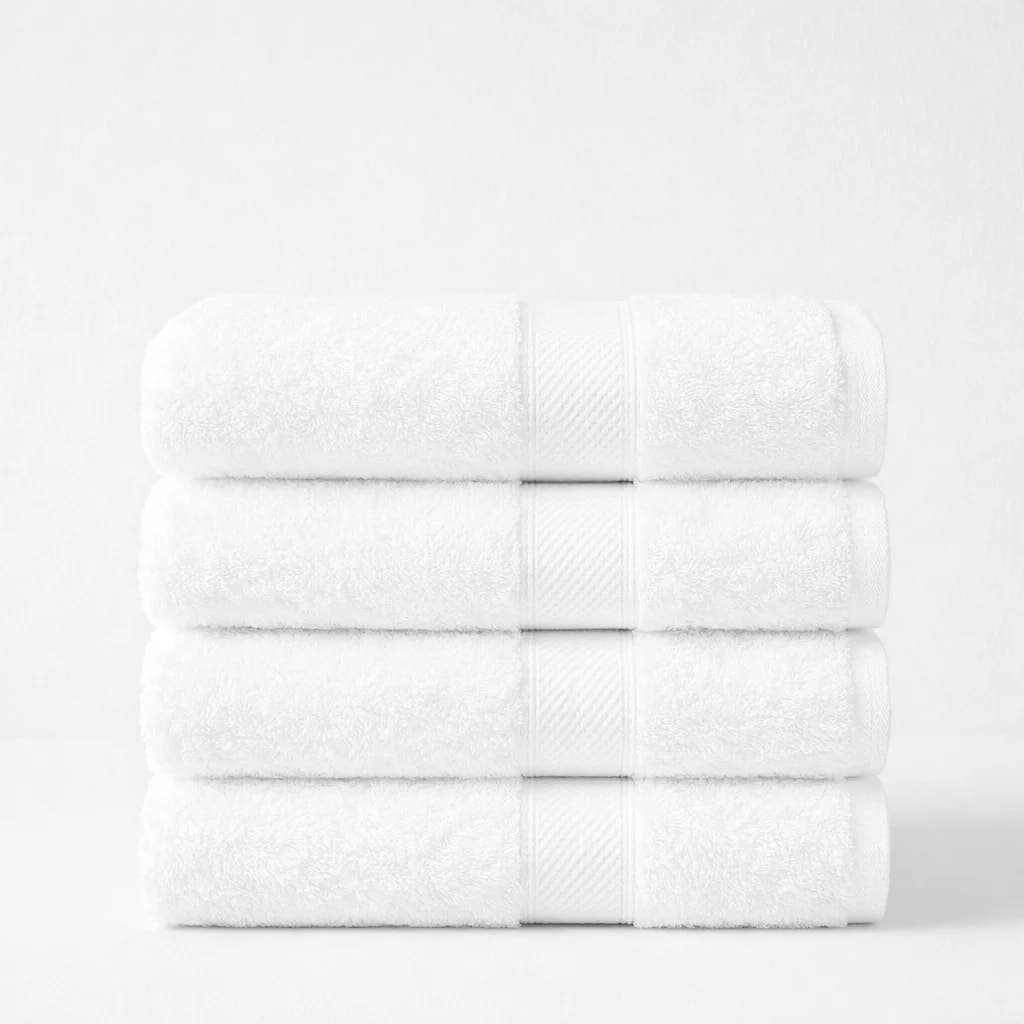
Hotel weight, and then some
Signature Bath Towel, Set of 4
600 GSM, 70 x 140 cm (27.5 x 55 in), 100% Egyptian cotton · $162.95
For people who want the fresh, fully dry hotel feel with a bit more cotton than a hotel would buy. If you already own 600 GSM towels that feel flat, fix the laundry routine before you replace them.
See the setIf you want the heavier home towel that no hotel would put on a cart, the Reserve line at 700 GSM is 686 g in the bath towel. The honest note: it is heavier than any hotel towel, it takes longer to dry, and in a humid bathroom with no fan the Signature will suit you better. In a bathroom with a window and a towel bar, it is the one I use.
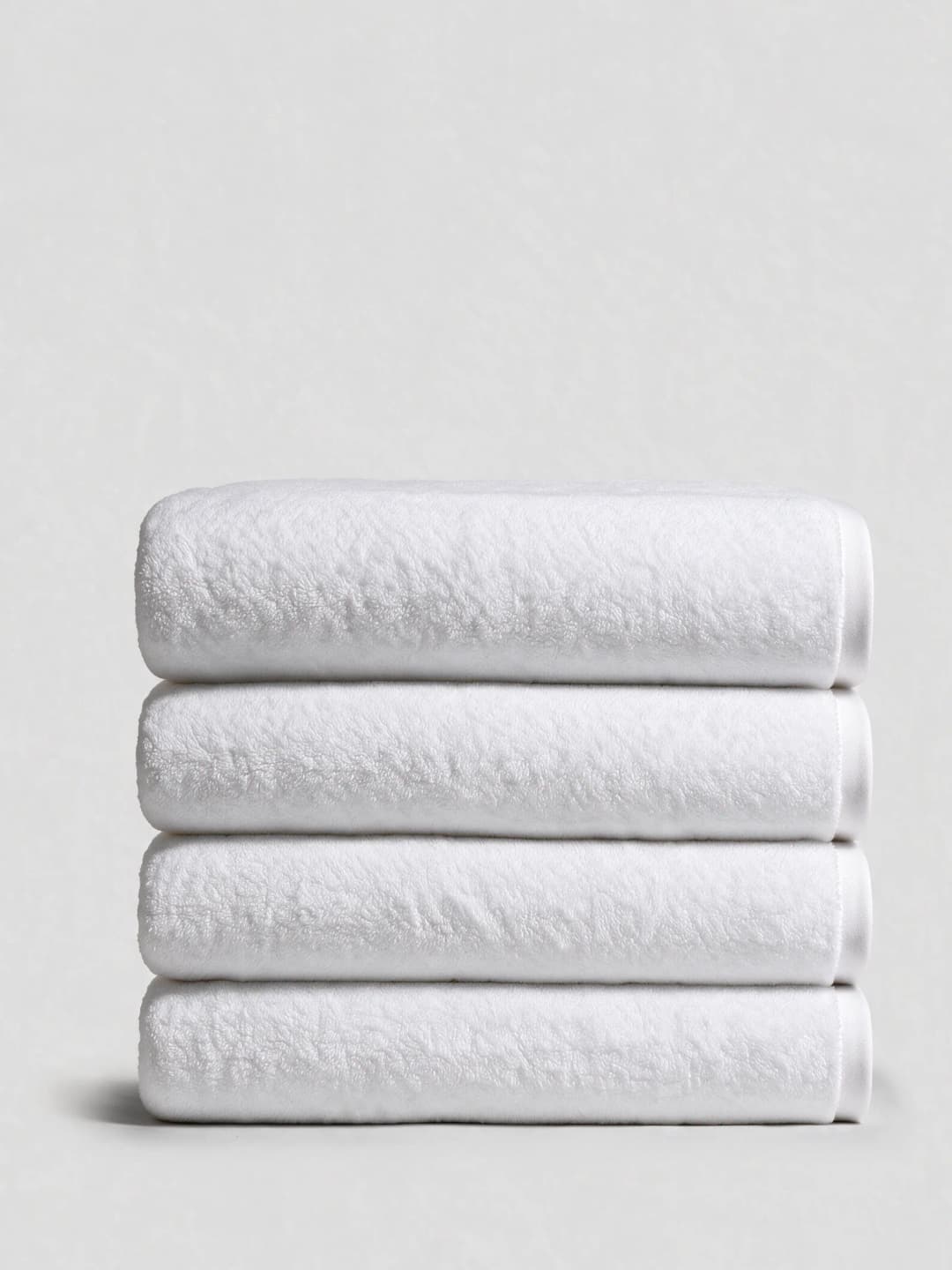
The heavier home towel
Reserve Bath Towel, Set of 4
700 GSM, 70 x 140 cm (27.5 x 55 in), 100% Egyptian cotton · $299.95
For a ventilated bathroom and a household that hangs towels properly. Skip it if your bathroom stays steamy all day; the extra weight will just mean a damp towel.
See the set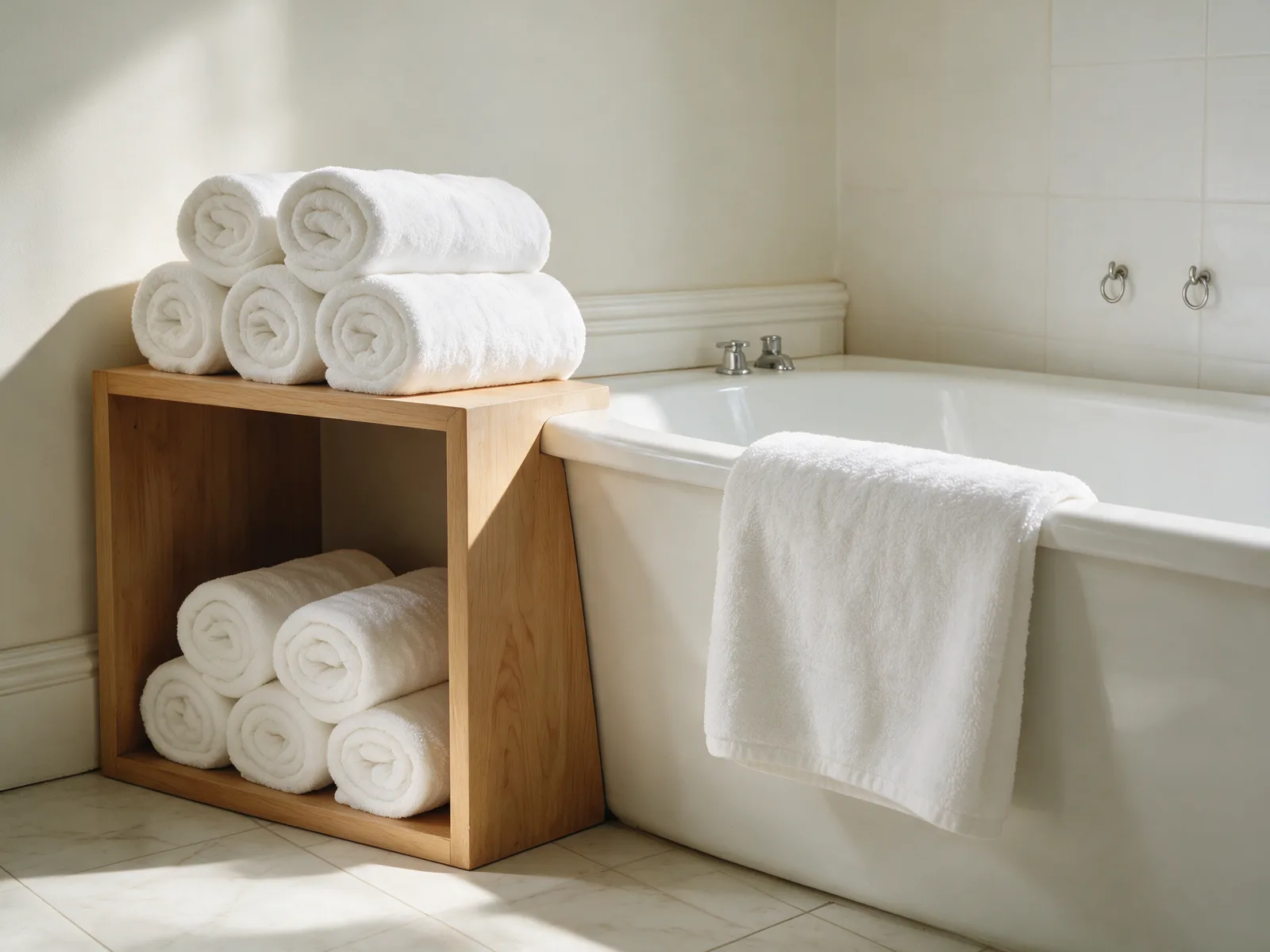
One last hotel habit worth stealing. Hotels put a folded bath towel or a thin mat on the floor because it launders with everything else. At home a dedicated bath mat takes the floor duty so your bath towels stay off the tiles. Ours is 900 GSM, 337 g at 50 x 75 cm (19.7 x 29.5 in), and it goes in the same warm wash as the towels.
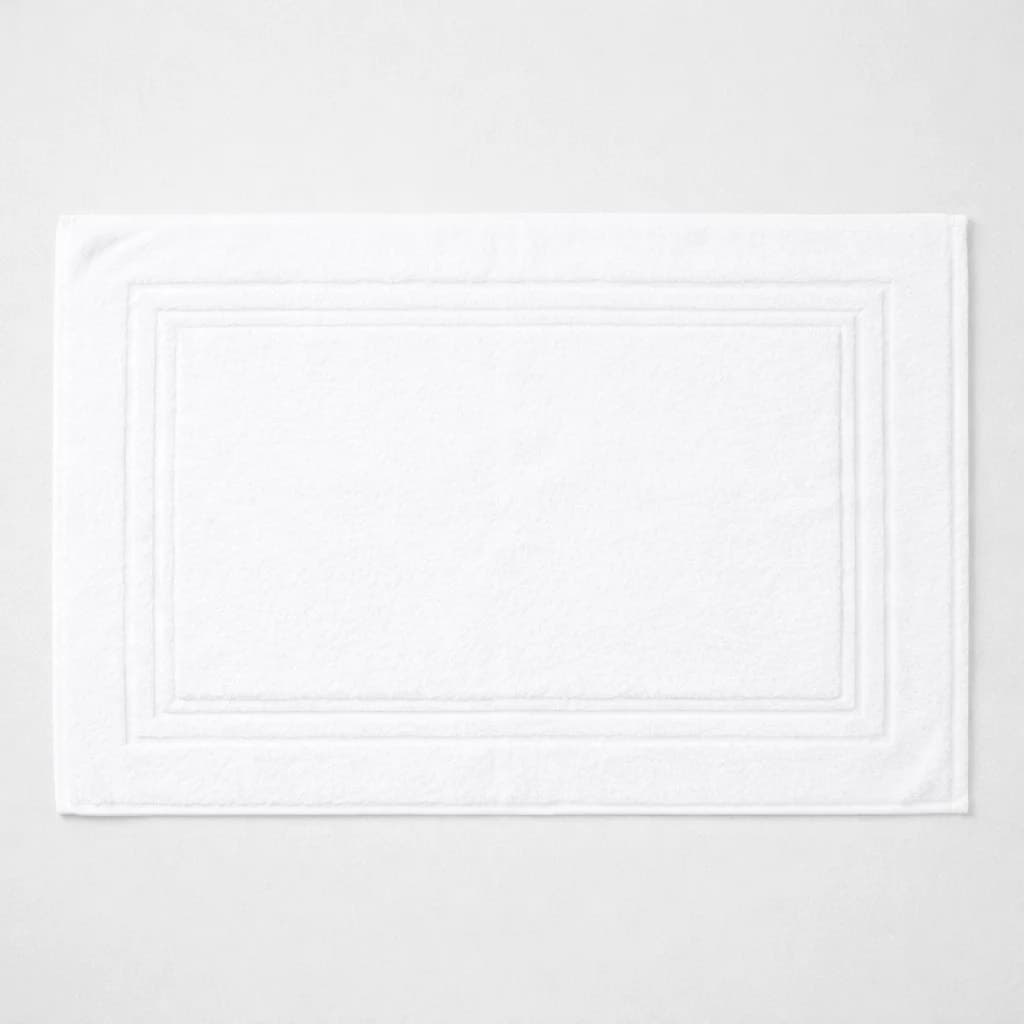
Floor duty
Egyptian Cotton Bath Mat
900 GSM, 50 x 75 cm (19.7 x 29.5 in), 337 g · $49.95
Keeps your bath towels off the floor. It is a mat, not a rug: it is meant to be washed with the towels, not vacuumed around.
See the bath matOn logistics, since it comes up: we weave in Egypt and ship from Egypt, so this is not a next-day purchase. Duties and import taxes are included in the price, nothing to pay on delivery. Standard shipping is free on orders over $99; express is $39.95.
Questions I get asked
What GSM are hotel towels?
As a general industry range, hotel towels sit around 400 to 550 GSM (grams per square meter). That is lighter than most towels sold for home use, which are usually 600 to 700 GSM. Hotels choose the lighter weight on purpose: it dries faster in a commercial dryer, costs less per piece and per wash, and survives hundreds of hot washes. A 400 to 550 GSM towel is a good towel for a business that launders it every day.
Why are hotel towels so soft?
Mostly because of the laundry, not the towel. Commercial laundries wash hot with a strong alkaline detergent, use no fabric softener, follow with a mild acid rinse that neutralizes the alkali, and tumble the towels fully dry. That strips every residue off the cotton and leaves the loops open. Hotels also retire towels early, so the towel in your room is young, fully dry, and has never met fabric softener or a damp hook.
Why are hotel towels white?
White can be washed hot and bleached without fading, so the laundry can be as aggressive as it needs to be. White towels from different batches look identical, so mismatched sets are invisible. Stains show on white, so stained towels get pulled from service instead of quietly staying in rotation. Any white towel can replace any other. And guests read white as clean, which is probably the reason that matters most to the people choosing the linen.
What brand of towels do hotels use?
It varies by property and by group, and there is no single answer. Most hotels buy from hospitality linen suppliers rather than from the brands you see in shops, and they order to a spec (weight, size, white, often a cotton-polyester ground) rather than to a name. Some hotel programs sell the actual towels used in their rooms, which is worth buying if you liked that specific towel. A retail label that says "hotel collection" tells you nothing on its own.
Are hotel towels 100% cotton?
Often the part you touch is. In general industry practice the pile (the loops) is cotton, but the ground weave underneath, which carries the strength, is frequently a cotton-polyester blend chosen for durability through hundreds of commercial washes. Some hotels do buy all-cotton towels. For home use an all-cotton ground is softer and absorbs on both faces, which is what we weave, but the blended ground is a reasonable choice for a laundry that washes every day.
What is hygrocotton?
It is a trademarked name for a hollow-core cotton yarn, which you will see on some hotel-program towels. As a general description, the yarn is spun so the center is open and traps air, which lets the towel loft and dry quickly at a lower weight. It is a yarn construction, not a type of cotton. Long-staple Egyptian cotton, by contrast, is about the fiber itself: longer fibers make a smoother, stronger yarn. They solve different problems and are not really competing claims.
How do I make my towels feel like hotel towels?
Copy the laundry, not the towel. Wash warm at 40C (104F), use half the detergent, never use fabric softener, and add white vinegar to the rinse every few washes to strip build-up. Dry the towel fully before you hang it, hang it spread out on a bar rather than doubled on a hook, keep two sets per person in rotation so every towel gets a day off, and retire towels once the pile has gone flat. Most of the hotel feel is in that list.
Keep reading
Towel GSM explained
What grams per square meter actually measures, where each weight makes sense, and the arithmetic behind our two lines.
Bath towel sizes explained
Bath towel, bath sheet, hand towel, washcloth: the common cuts laid side by side, in centimeters and inches.
How to buy Egyptian cotton towels
What the label does and does not tell you, and how to choose between 600 and 700 GSM for your bathroom.